Christ and salvation · 5 min read
Why evangelise if God elects? Christ’s death and the gospel call
The Canons of Dort teach that God brings people to faith through the gospel. Election therefore gives no permission to withhold its message. Their account joins Christ’s sacrifice, the promise to everyone who believes, and His effective redemption of His people. Understanding those connections answers a common question: if God chooses whom to save, why evangelise?
Published
Does “limited atonement” mean Christ’s death is insufficient?
Second Head, Article 3 describes Christ’s death as the complete sacrifice for sins. Its value is infinite, sufficient for the sins of the whole world. The familiar label limited atonement can confuse a reader if it suggests that the sacrifice has too little worth to save.
Article 4 explains that worth by who Christ is: the eternal Son of God, truly human and perfectly holy. It also points to His suffering under the wrath and curse due to sin. The Canons ground the value of His death in His person and saving work.
The distinction they make concerns the saving purpose and effective accomplishment of His death. It is not a calculation of how much forgiveness is available. There is no shortage in Christ’s sacrifice that a preacher must measure before inviting someone to believe.
This guide explains the Reformed position confessed at Dort. Other Christian traditions understand the extent and application of the atonement differently. The first step in evaluating Dort is to keep its affirmation of infinite worth alongside what it says about effective redemption.
Who should hear the gospel invitation?
Article 5 directs that the promise of life to everyone who believes in Christ crucified, together with the command to repent and believe, be announced without discrimination to the peoples to whom God sends the gospel.
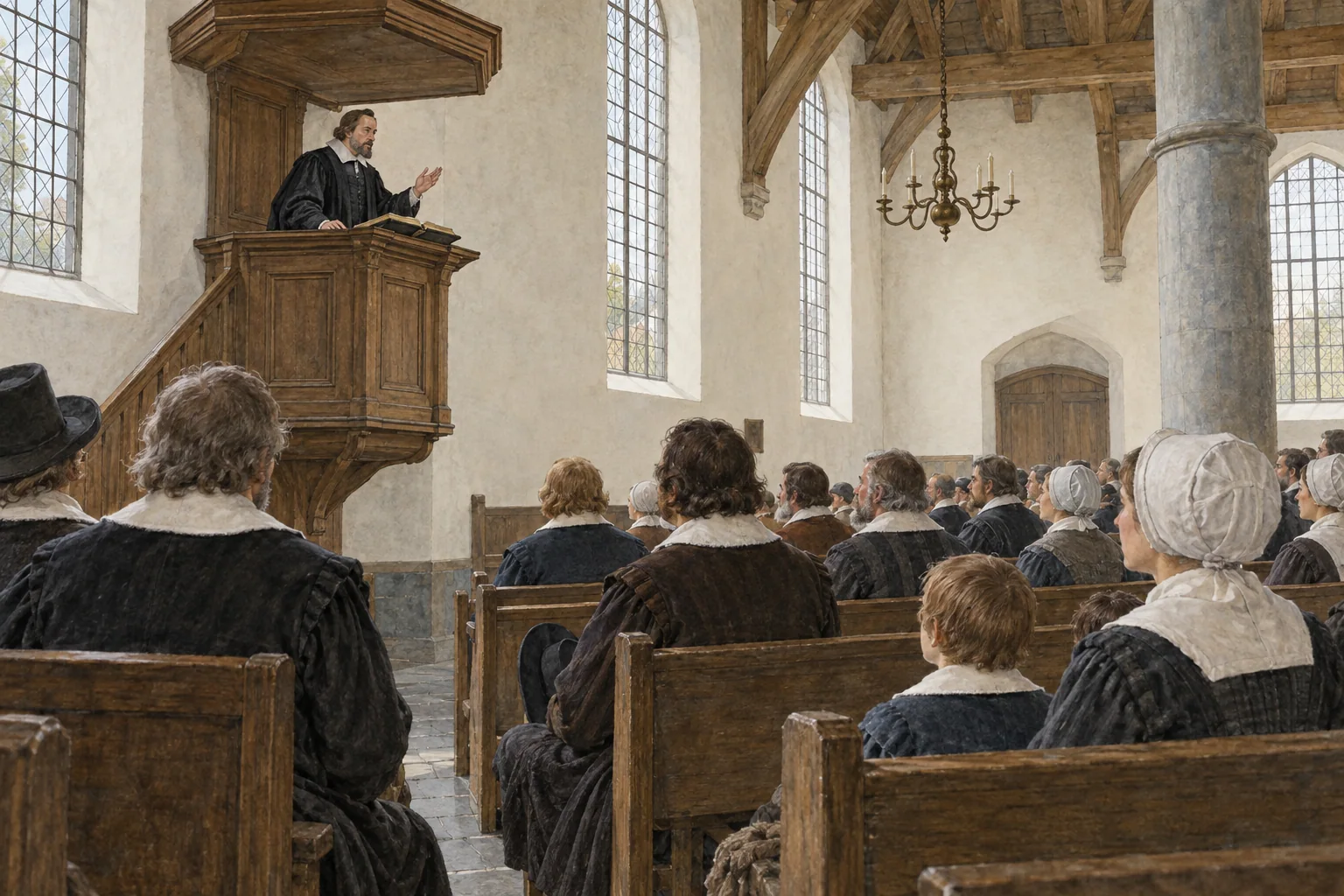
A preacher is not instructed to discover who is elect before speaking. Nor should a Christian decide that a neighbour’s background or past behaviour makes the invitation inappropriate. The message addresses people as those called to repent and trust Christ. The promise concerns everyone who believes.
Third and Fourth Heads, Article 8 adds that the call is serious and God sincerely promises life and rest to those who come. A hearer is not being asked to respond to a sham offer.
Second Head, Article 6 places the blame for unbelief with those who refuse the gospel, not with a defect in Christ’s sacrifice. The text holds together a sufficient Saviour, a sincere call and a responsible hearer.
- What is its worth?
Articles 3–4: Christ’s sacrifice has infinite value.
- To whom is the gospel proclaimed?
Article 5: the promise and command are announced without discrimination.
- What does His death accomplish?
Article 8: it effectively redeems the people given to Christ.
What does Christ’s death actually accomplish?
Article 8 describes the Father’s gracious purpose that Christ’s death effectively redeem those He has chosen. Its saving benefits include faith, cleansing from sin and preservation to the end. In this account, the cross secures the salvation God intends.
The article speaks of people from every people, tribe, nation and language. Particular redemption here concerns God’s saving purpose in Christ; it does not restrict salvation to one ethnic group or place. A church cannot use it to justify a narrow cultural boundary for its preaching.
Faith itself belongs among the benefits Christ obtains. The Canons therefore describe believing as receiving salvation through a gift of grace. They do not make the hearer’s trust a contribution that supplies something missing from the worth of Christ’s death.
The distinction is useful when someone asks, “Can I come to Christ without knowing whether I am elect?” Article 5 directs that person to the promise attached to faith in Christ. It does not make prior access to God’s hidden purpose a condition for responding to the gospel.
Why evangelise if God has already chosen?
First Head, Article 3 says God sends proclaimers of the gospel so that people may be brought to faith. It appeals to Romans 10:14–15, which connects believing with hearing and hearing with preaching. In the Canons, God’s purpose includes the way people receive the message.
Third and Fourth Heads, Article 17 develops that connection. God’s powerful work does not cancel the gospel or the church’s ministry. The article warns against separating His grace from the means He has appointed.
Consider a congregation deciding whether to support someone who teaches the gospel in another community. The claim that God saves His people gives it no reason to leave that community without the message. The Canons describe proclamation as part of how He gathers believers. Dependence on Him supports the work and gives Him the praise for its fruit.
This also shapes an ordinary conversation. A Christian can listen carefully to a friend’s questions, explain Christ’s death and resurrection, and invite the friend to trust Him. They do not need to identify hidden election or manufacture an inward change. Their responsibility is to communicate faithfully; the Spirit’s renewal is God’s work.
The practical answer is therefore grounded in the text: proclaim because God commands the gospel to be heard, because its promise is sincere, and because He works through it. For a fuller account of renewal and willing faith, continue with the guide to grace and free will, then read the Second Head’s rejections alongside its positive articles.
Sources and further reading
These guides explain the text from a Reformed perspective. They are original editorial commentary, separate from the historic confession and its published translation.
- Second Head: Christ’s Death and Human Redemption Through ItPrimary text, especially Articles 3–8.
- Second Head: Rejections of ErrorsThe disputed claims and the synod’s replies.
- CRCA-published Canons of Dort (PDF)Source text, historical introduction, articles, rejections of errors, and conclusion.
- First Head, Article 3: The preaching of the gospelGod sends proclaimers so that people may be brought to faith; the article cites Romans 10:14–15.
- Third and Fourth Heads, Articles 8 and 17The serious gospel call and God’s use of means in conversion.